Free vs Paid VPN: Which One Should You Choose in 2026?
Comparing free and paid VPN services. Discover the hidden risks of free VPNs and why a premium subscription is better for your security and speed.
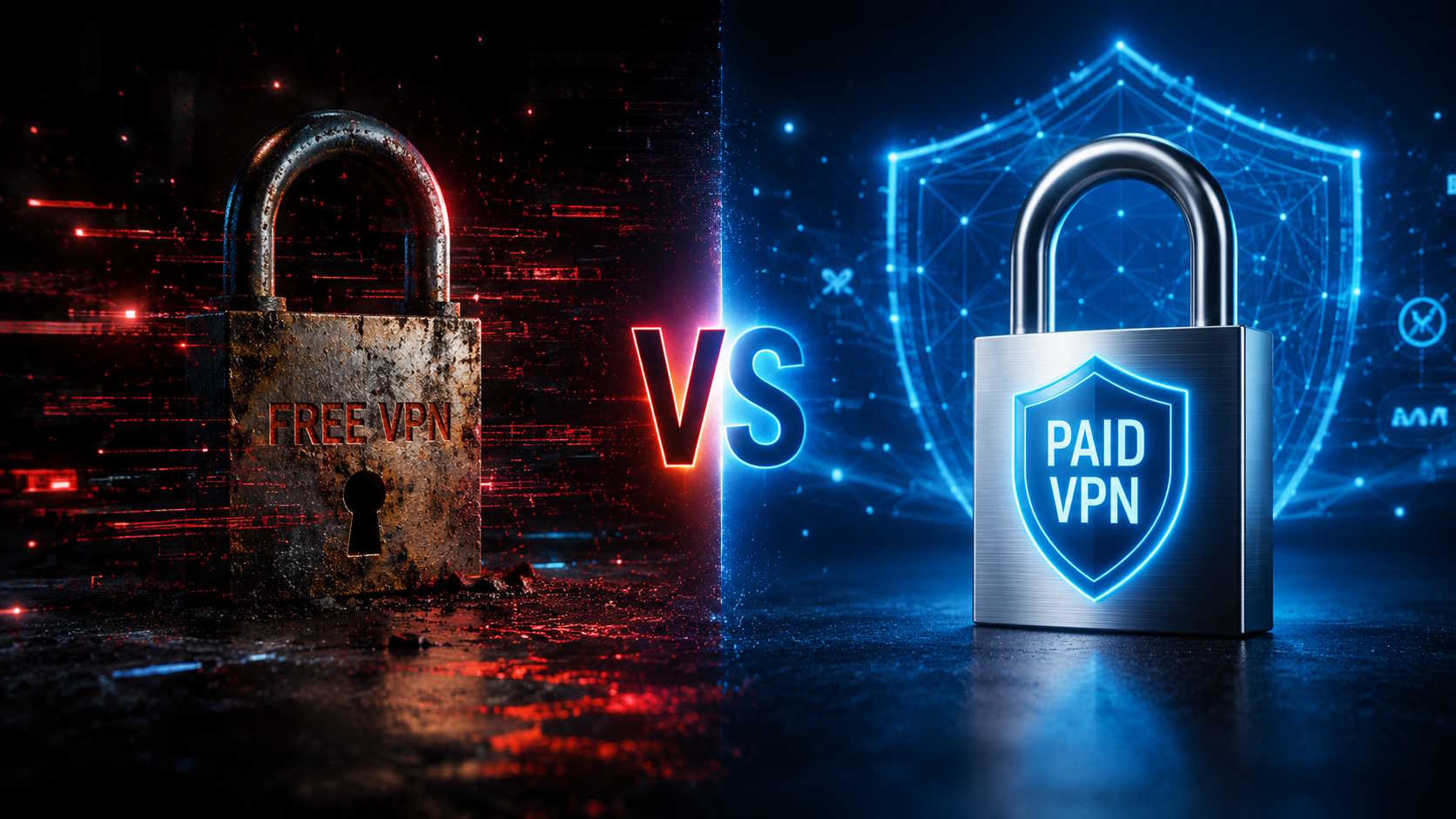
Free vs Paid VPN: The hidden truth behind “Free”
Everyone loves free tools, especially when it comes to online privacy and cybersecurity. A quick search on the App Store or Google Play reveals many “Free VPN” apps promising instant anonymity and unrestricted internet access with a single click.
However, in cybersecurity, one rule always applies:
If you are not paying for the product, you are probably the product.
In this guide, we’ll explain the major differences between free and paid VPN services, the hidden risks behind many free VPN providers, and why a premium VPN has become essential in 2026.
How Do Free VPNs Make Money?
Running a global VPN infrastructure is extremely expensive. VPN companies must maintain:
- Servers worldwide
- Massive bandwidth
- Security infrastructure
- App development
- Customer support
- Ongoing security updates
If a provider offers everything for free, they usually generate revenue elsewhere.
Common Monetization Methods
Selling User Data
Many free VPN services log:
- Browsing activity
- IP addresses
- Device information
- Location data
- Session duration
That data may later be sold to advertisers or data brokers.
Adware & Tracking
Free VPN apps often inject:
- Pop-up ads
- Trackers
- Redirects
- Aggressive advertising scripts
This can negatively impact both privacy and device performance.
Malware Risks
Several studies have revealed that many free VPN apps contain:
- Spyware
- Keyloggers
- Hidden trackers
- Malicious code
Instead of protecting your privacy, some free VPNs may expose your data even further.
The biggest limitations of free VPNs
Even trustworthy free VPN plans usually come with serious restrictions.
Limited data caps
Most free VPN services provide:
- 500MB to 10GB per month
That’s often insufficient for:
- Netflix streaming
- HD YouTube
- Gaming
- Remote work
Very few servers
Most free users only get access to:
- 2 - 10 locations
- Overcrowded servers
- Limited infrastructure
This results in:
- High latency
- Buffering
- Random disconnects
Slow speeds
Many providers throttle free users to prioritize premium subscribers.
The result:
- Slow browsing
- Laggy streaming
- Poor overall performance
Streaming restrictions
Most free VPNs fail to bypass geo-blocks on platforms like:
- Netflix
- Disney+
- Hulu
- BBC iPlayer
Their IP ranges get blocked quickly.
Why premium VPNs are worth paying for
A premium VPN offers much more than simply hiding your IP address.
It provides a complete privacy and security ecosystem.
Real no-logs policies
Top-tier VPN providers:
- Do not store activity logs
- Do not track browsing behavior
- Do not sell customer data
Many undergo independent security audits to verify their claims.
Unlimited speed & bandwidth
Premium VPNs provide:
- Unlimited bandwidth
- Fast global servers
- Stable 4K streaming
- Smooth gaming
- Reliable performance
Massive global networks
Leading providers offer:
- Hundreds of servers
- 100+ countries
- Optimized streaming servers
- Dedicated security infrastructure
Advanced security features
Premium VPNs typically include:
- Kill Switch
- DNS Leak Protection
- Split Tunneling
- Multi-Hop VPN
- RAM-only servers
- AES-256 Encryption
- WireGuard Protocol
These features significantly improve real-world security.
Free VPN vs Paid VPN Comparison
| Feature | Free VPN | Paid VPN |
|---|---|---|
| Security | Questionable / Often risky | High / AES-256 Encryption |
| Speed | Slow / Limited | Fast / Ideal for 4K Streaming |
| Servers | Very limited | Thousands worldwide |
| Privacy | Often logs user data | Strict No-Logs Policy |
| Streaming | Usually blocked | Netflix / Disney+ / Hulu |
| Data Limits | 500MB – 10GB | Unlimited |
| DNS Leak Protection | Rarely included | Included |
| Kill Switch | Rare | Standard |
| Support | Minimal | 24/7 Live Chat |
The biggest risk: DNS & IP leaks
Even if your VPN is connected, you may still leak sensitive information.
Many VPN services, especially free ones, suffer from:
- DNS leaks
- WebRTC leaks
- IPv6 leaks
This means your real IP address could still be exposed without your knowledge.
How to check if your VPN is actually working
Before trusting any VPN provider, you should always test your connection for leaks.
At checkip.gr, you can instantly verify:
- Your public IP address
- VPN IP masking
- DNS leaks (check online for DNS Leaks)
- WebRTC leaks (check online for WebRTC Leaks)
- IPv6 leaks
- ISP information
- Geolocation details
What should you see?
✅ Your visible IP should be different from your real IP
✅ Your country should match the VPN server location
✅ No DNS leaks should appear
✅ Your real ISP should remain hidden
If your actual IP address is still visible while connected to a VPN, your privacy is compromised.
Final verdict: Which VPN should you choose in 2026?
If you only need occasional basic protection, a free VPN might be enough for light usage.
However, if you:
- Use online banking
- Connect to public Wi-Fi
- Stream content regularly
- Need real privacy
- Protect business data
- Want maximum speed
then a premium VPN is absolutely worth the investment.
A high-quality VPN subscription costs less than a coffee per month and the privacy protection it provides is invaluable.
💡 checkip.gr Recommendation
No matter which VPN provider you choose, always test it using checkip.gr.
If your real IP remains visible while the VPN is active, your connection is leaking data and you should switch providers immediately. Check out our in-depth K1VPN review.